SPMD does not manufacture series machinery. Every special-purpose machine is engineered for one customer need and receives its own project reference, designation, type, unique serial number, quantity 1, technical file and declaration of conformity.
As in established industrial practice, contractual conformity and regulatory CE conformity are attached to the identified supply after inspection and testing.
For machinery placed on the European market before 20 January 2027, the applicable framework is Machinery Directive 2006/42/EC. Machinery placed on the market from that date is covered by Regulation (EU) 2023/1230.
02 — Conformity process
From risk assessment to CE marking.
01
Assess risks
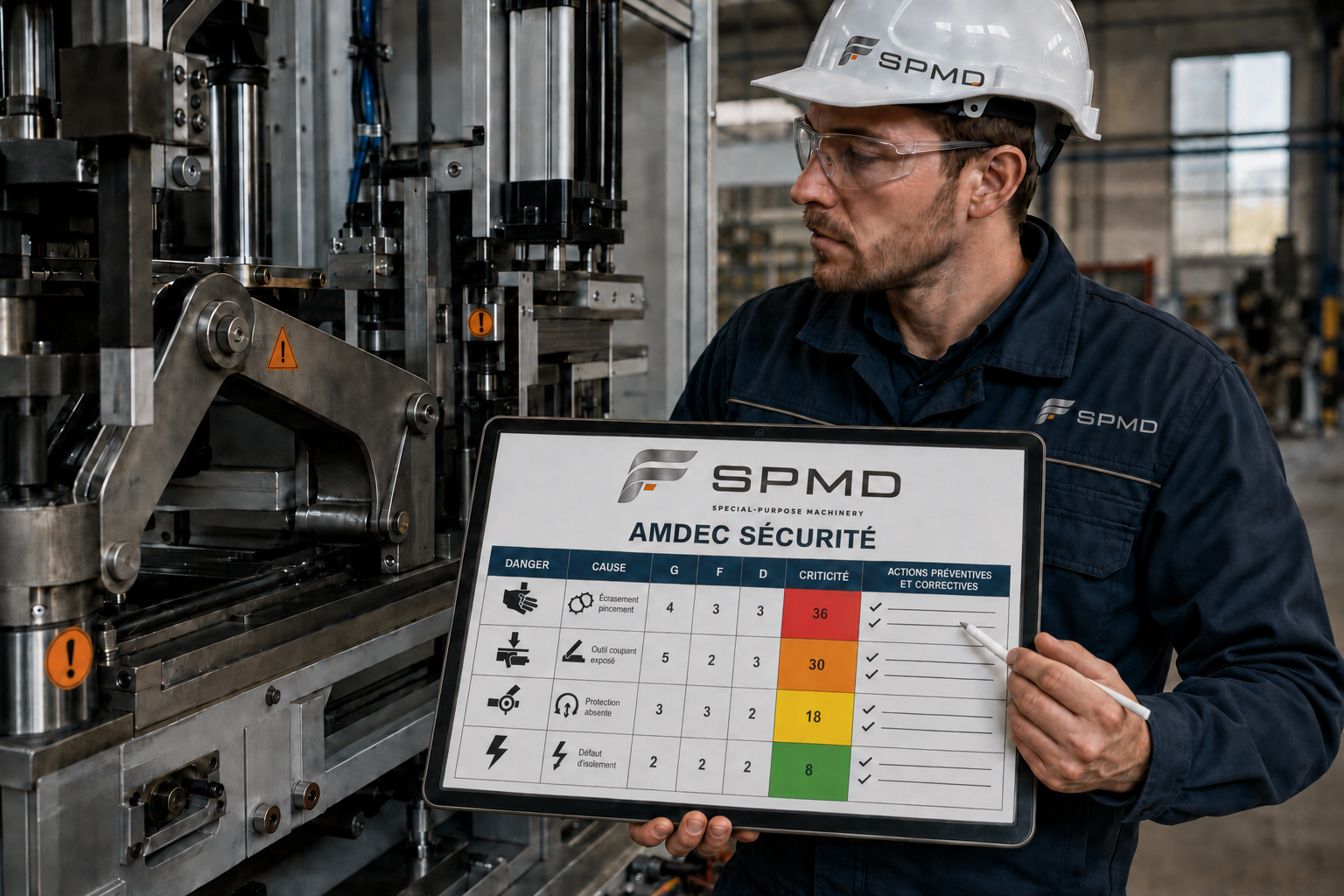
Before commissioning, SPMD identifies and assesses hazards, reduces risks, then integrates the necessary protective measures and safety functions. Residual risks are documented and communicated so the machinery is designed for safe operation in its intended use.
EN ISO 12100:2010 — Safety of machinery · risk assessment and risk reduction
02
Integrate safety functions
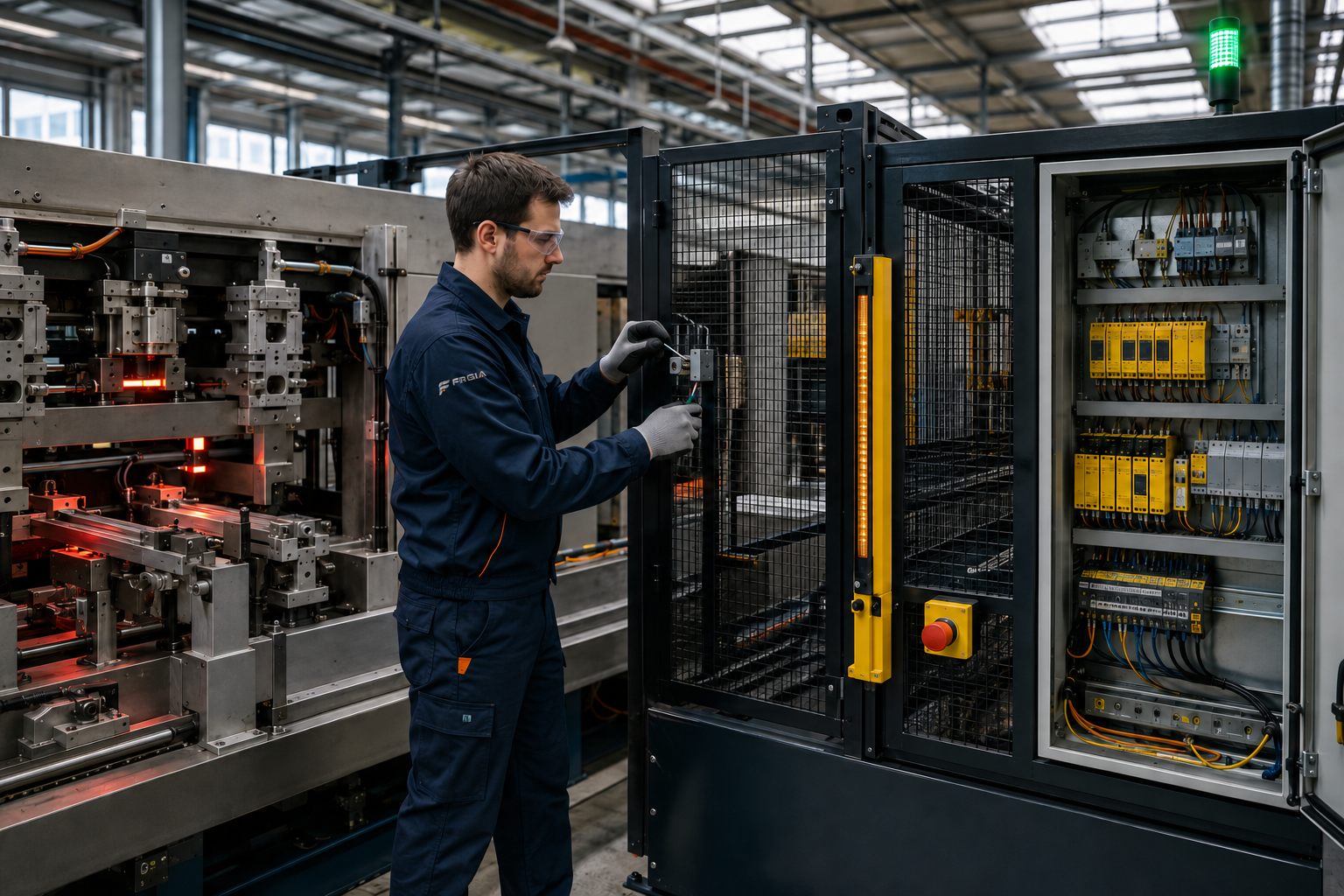
SPMD turns the risk-reduction measures identified by the assessment into practical solutions: guards and interlocks, presence sensing, emergency stop and safety-related controls. Each function is specified, integrated and validated so the machinery achieves the safety level required for its intended use.
EN ISO 13849-1:2023 · EN ISO 13849-2:2012 — safety control design and validation
EN IEC 62061:2021+A1:2024 — functional safety of control systems, depending on the selected architecture
EN ISO 14120:2015 · EN ISO 14119:2024 — guards and interlocks
EN ISO 13850:2015 · EN ISO 14118:2018 — emergency stop and prevention of unexpected start-up
EN ISO 13855:2024 · EN ISO 13857:2019 · EN ISO 13854:2019 — positioning, safety distances and crushing gaps
EN 60204-1:2018 · EN IEC 61496-1/-2 — electrical equipment and electro-sensitive protective equipment
Directive 2006/42/EC — Article 5 §1(a) · Annex I §§1.1.2, 1.2.1 to 1.2.6, 1.3.7 to 1.3.8, 1.4.1 to 1.4.3 and 1.5.1
Directive 2006/42/EC — Article 7 §2 · presumption of conformity through published harmonised standards
03
Verify & document
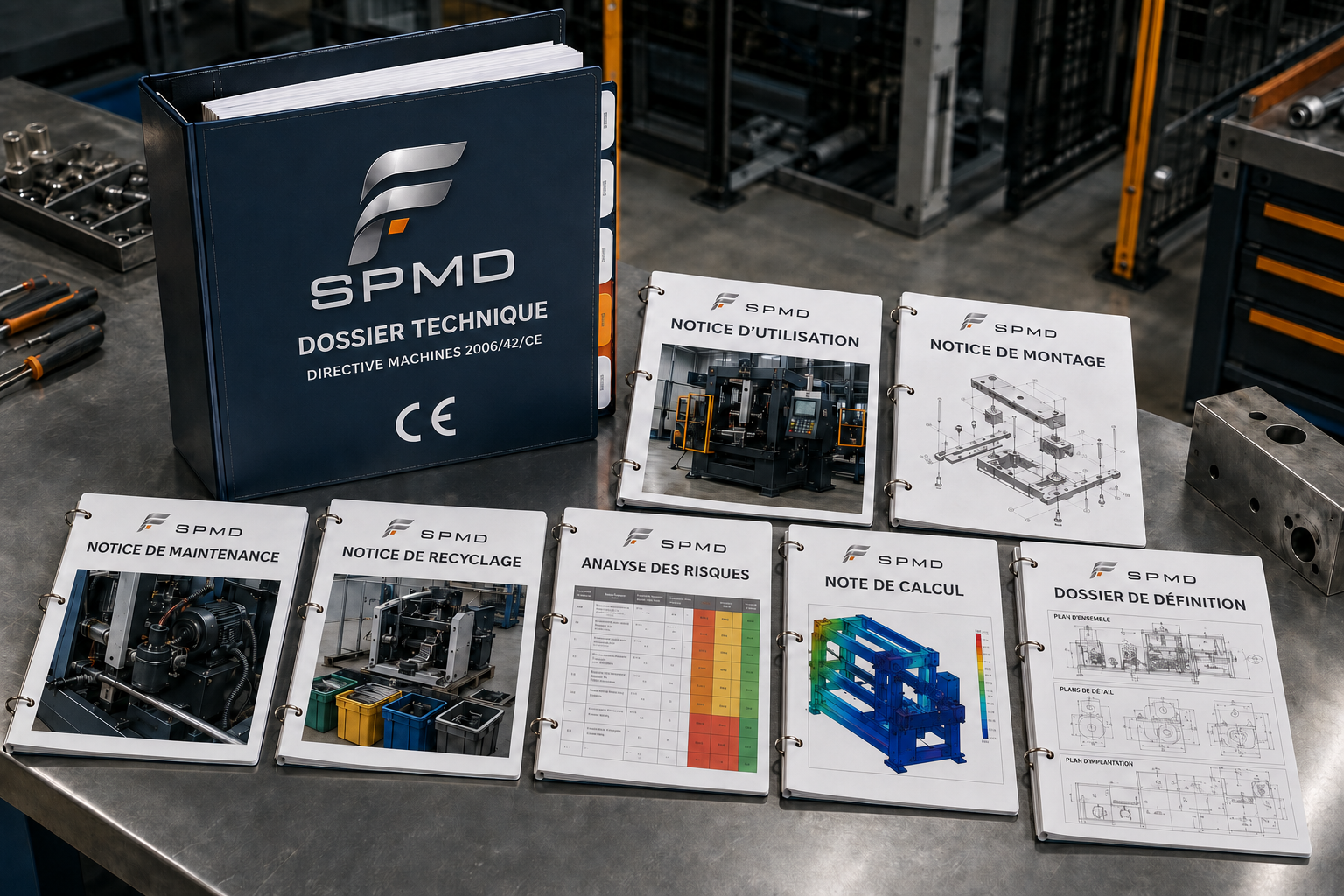
SPMD compiles an identified and revision-controlled technical file for each machine: risk assessment, definition package — general arrangement, detailed and installation-layout drawings —, calculation notes, test reports, and operating, assembly, maintenance and end-of-life instructions. Every document is linked to the equipment reference and serial number.
EN ISO 20607:2019 — principles for drafting instruction handbooks
EN ISO 12100:2010, §7 — documentation of risk assessment and risk reduction
Directive 2006/42/EC, Annex I §1.7.4 and §1.7.4.2(i to t) — instruction content
Directive 2006/42/EC, Annex I §§1.6.1 to 1.6.5 — maintenance and intervention
Directive 2006/42/EC, Annex I §1.1.2(a) — lifecycle, decommissioning and disposal
Directive 2006/42/EC, Annex VII A §1(a) — general and detailed drawings, calculations and test results
04
Functional & load testing
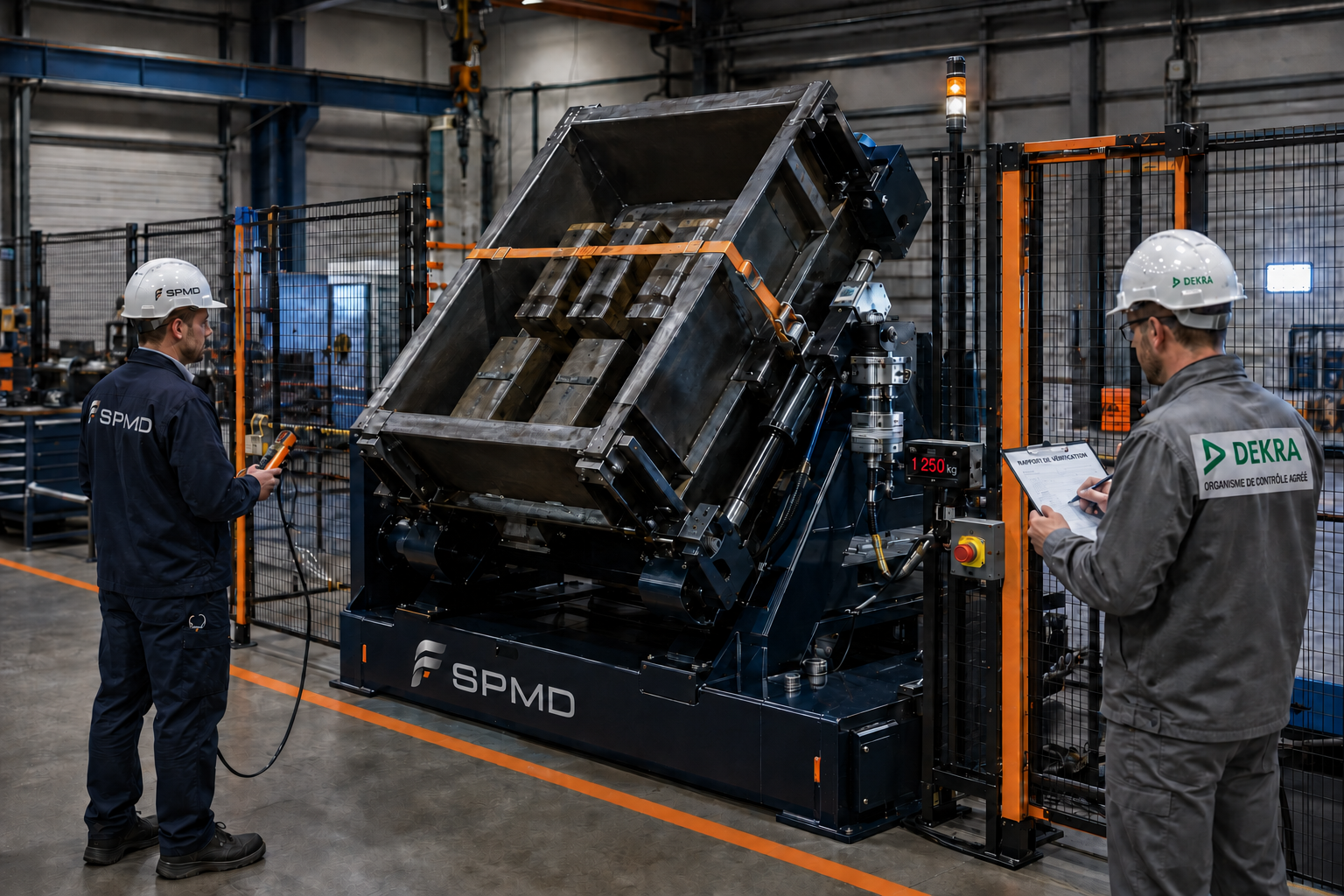
Before commissioning, SPMD verifies operating cycles, sensors, interlocks, emergency stops, alarms and the different operating modes. For relevant lifting or handling machinery, this validation is completed by static and dynamic testing with calibrated loads. Where required by the applicable regulatory or contractual framework, the tests are witnessed by an independent competent or accredited inspection body — such as DEKRA or Bureau Veritas — which issues a verification report and, where applicable, a statutory inspection report.
Directive 2006/42/EC — Article 5 §1(a) · compliance with essential requirements before placing on the market or putting into service
Directive 2006/42/EC — Annex I §4.1.3 · static and dynamic testing of lifting machinery and accessories
Directive 2006/42/EC — Annex VII A §1(a) · test reports and results included in the technical file
EN ISO 13849-2:2012 · validation of safety functions by analysis and testing
EN 60204-1:2018, §18 · verification of the machine’s electrical equipment
ISO 4310:2009 · crane test code and procedures, where applicable
05
CE conformity achieved
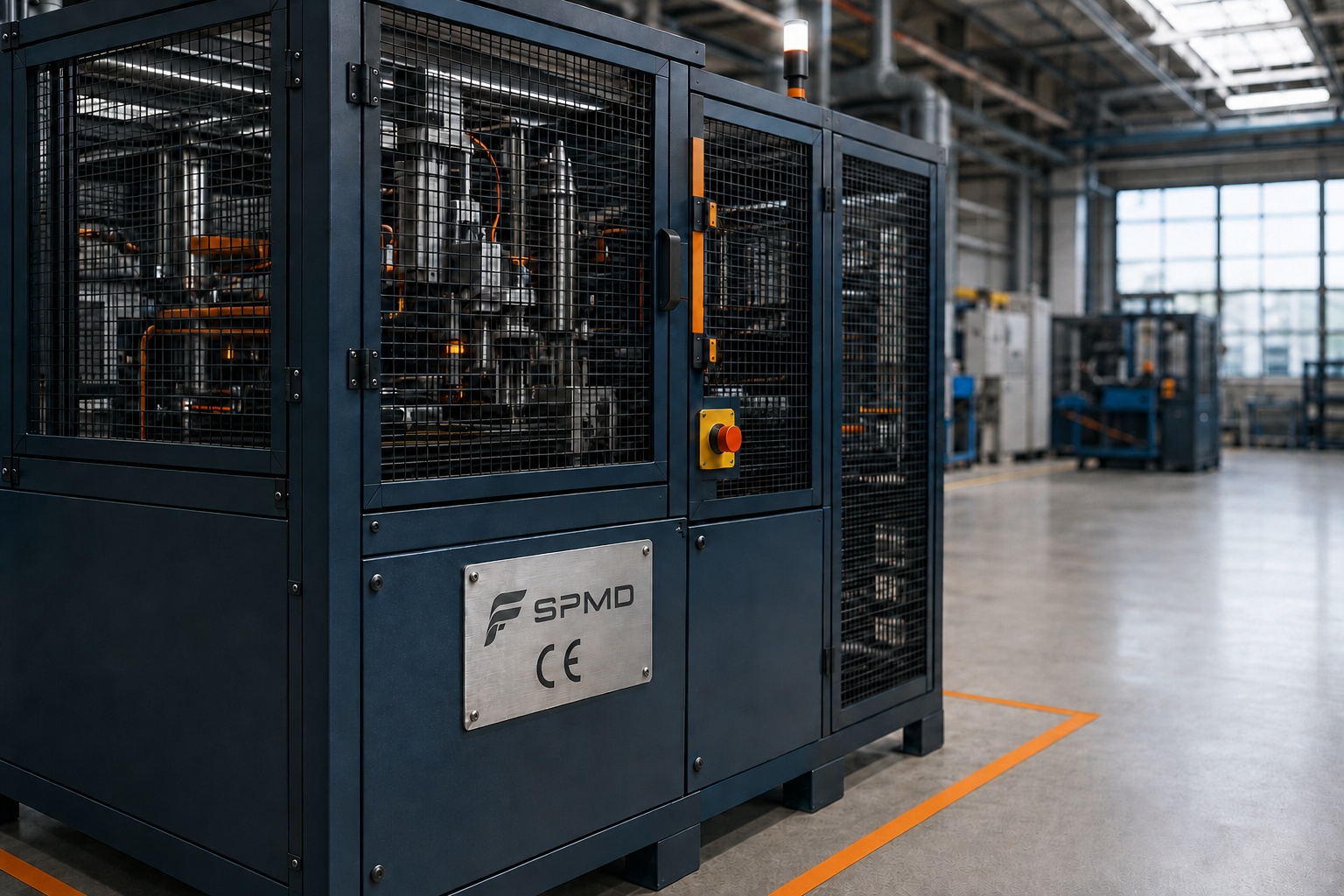
Following verification and testing, SPMD delivers machinery secured for its intended use: guards closed and interlocked, safety functions validated, residual risks communicated and traceability established. The CE plate and declaration of conformity provide tangible evidence of conformity for the identified machine.
Directive 2006/42/EC — Article 5 §1(e-f) · declaration and CE marking
Directive 2006/42/EC — Annex II, Part 1.A · declaration content and signature
Directive 2006/42/EC — Article 16 · Annex III · CE marking proportions
Directive 2006/42/EC — Annex I §1.7.3 · permanent machinery identification
03 — Permanent CE marking
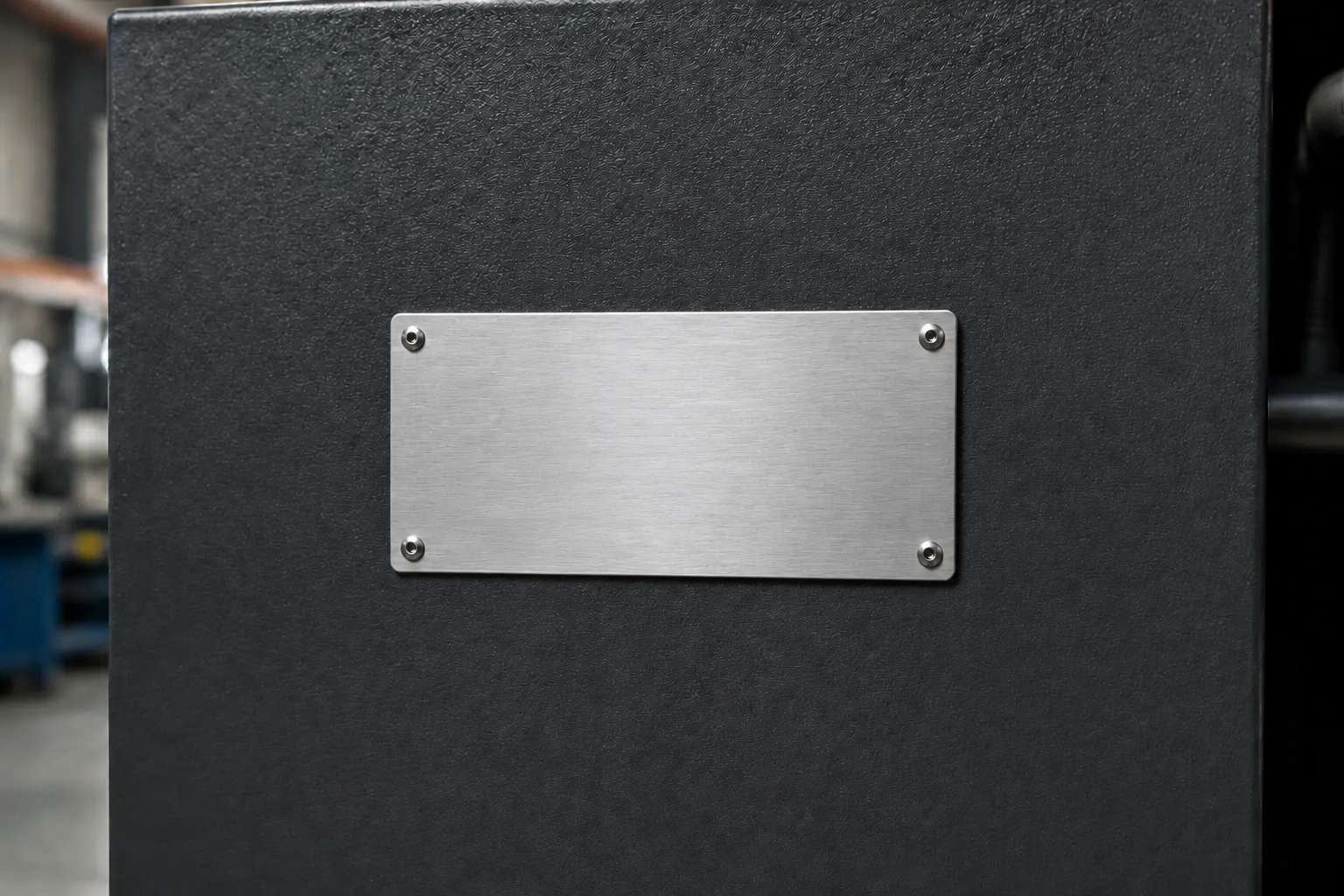
Permanent machine identification.
This plate is affixed to each machine in accordance with Annex I, §1.7.3 of Machinery Directive 2006/42/EC.
The exact standards and versions are selected according to the machine, its intended use and the risk assessment. Commonly applied references include:
EN ISO 12100Risk assessment and risk reductionEN ISO 13849-1:2023 / EN ISO 13849-2:2012Safety-related parts of control systemsEN 60204-1:2018Electrical equipment of machinesEN ISO 13850Emergency-stop functionEN ISO 14119:2024 / EN ISO 14120:2015Interlocks and guardsEN ISO 13857:2019Safety distancesEN ISO 20607:2019Instruction handbook — drafting principles
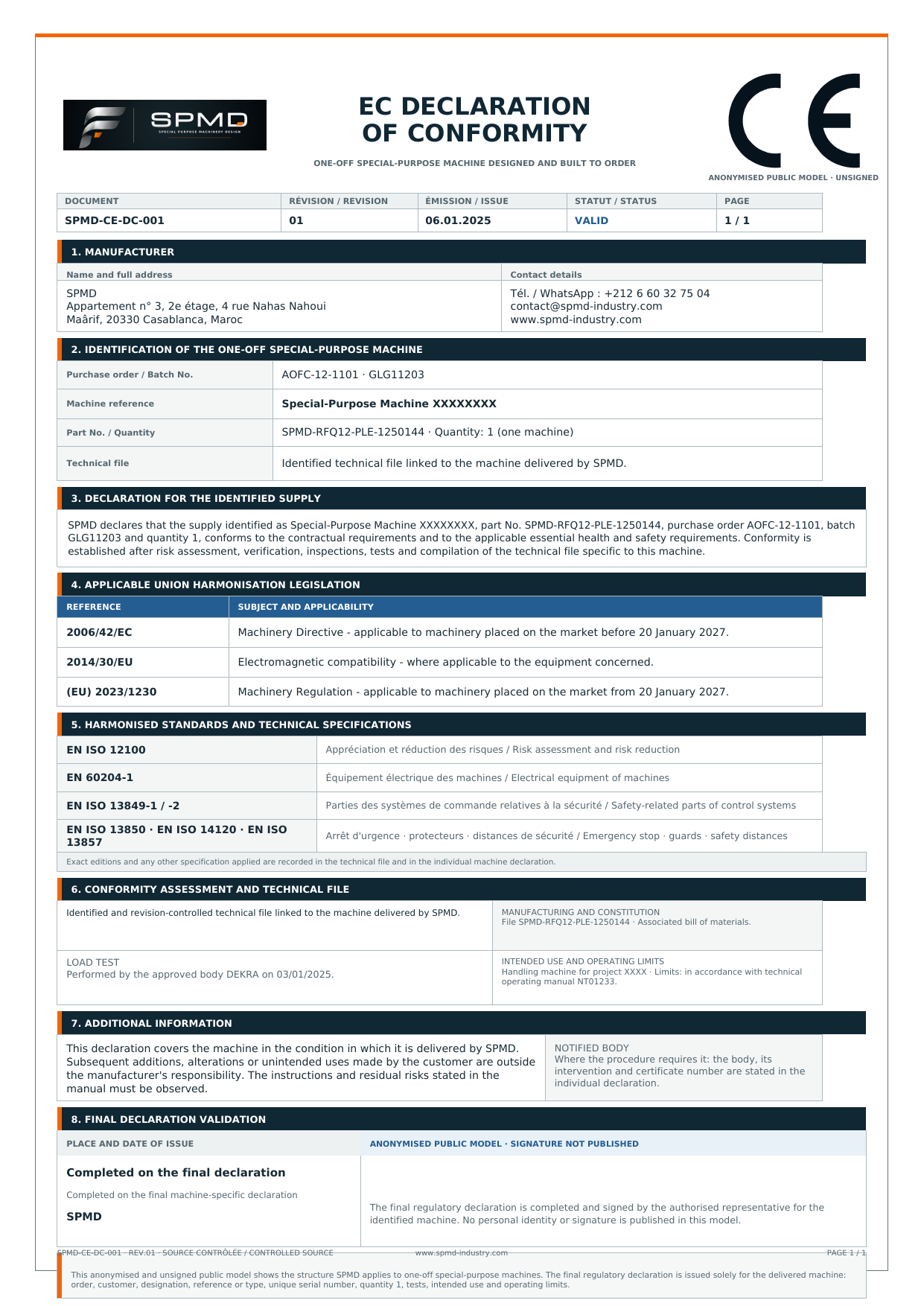
The declaration follows the delivered one-off machine.
The final document states the customer and order, designation, reference or type, unique serial number, quantity 1, technical-file owner, inspections and tests, intended use and operating limits. The public PDF below is anonymised and unsigned: it discloses neither personal identity nor signature.
Anonymised unsigned public modelOne-off machine · DEKRA load test · quantity 1
Regulatory transition
20.01.2027
Regulation (EU) 2023/1230 becomes mandatory and replaces Directive 2006/42/EC. SPMD incorporates this transition into projects concerned by that placing-on-the-market date.
External verification, when the project requires it.
Depending on the machine, the applicable requirements and the contractual scope, SPMD may call upon an independent inspection body to witness functional or load tests, inspect the equipment and issue the corresponding verification report.
Bureau Veritas and DEKRA are independent third-party organisations. Their mention describes possible project-specific assignments and does not imply affiliation, exclusivity or systematic certification of every SPMD machine. The manufacturer remains responsible for the CE declaration, except where the applicable conformity procedure requires the involvement of a notified body.
Compliance from the outset
A CE-compliant machine project to engineer?
Share the intended use, operating environment and technical constraints. SPMD will incorporate safety and regulatory requirements into the project scope.